Drought in Morocco: why the earthquake brought forgotten springs back to life
Residents of the High Atlas have witnessed an unusual change: springs that had been dry for decades began flowing again after the 2023 earthquake. Welcome news, but not a solution to the water crisis.
Morocco is experiencing one of the worst droughts in its history. Six consecutive dry seasons, reservoirs below 30% capacity and rapidly falling groundwater levels have put communities under pressure. In the High Atlas, however, an unexpected phenomenon is attracting hydrologists' attention.
The earthquake brought water back to the surface
Reports published by Maroc Diplomatique, supported by accounts from residents of Asni and Tafza, describe how the earthquake of 8 September 2023 revived springs that had disappeared decades earlier. Geologists are familiar with the mechanism: seismic waves can reopen fractures in rock, release trapped groundwater and change underground flow paths.
“This spring flowed in my grandfather's day. It dried up in the 1990s. Three days after the earthquake, it came back.” — A resident of Tikht.
A lifeline, but not a lasting solution
This has brought valuable relief to some villages where reaching drinking water previously meant a walk of more than two hours. However, it does not resolve the national water crisis.
The figures remain concerning:
- Reservoirs were 30% full on average in spring 2026
- More than 50 villages in the Al Haouz region still depend on water delivered by tanker
- Groundwater levels continue to fall by 1 to 3 metres a year in some areas
What Maghreb Secours sees in the field
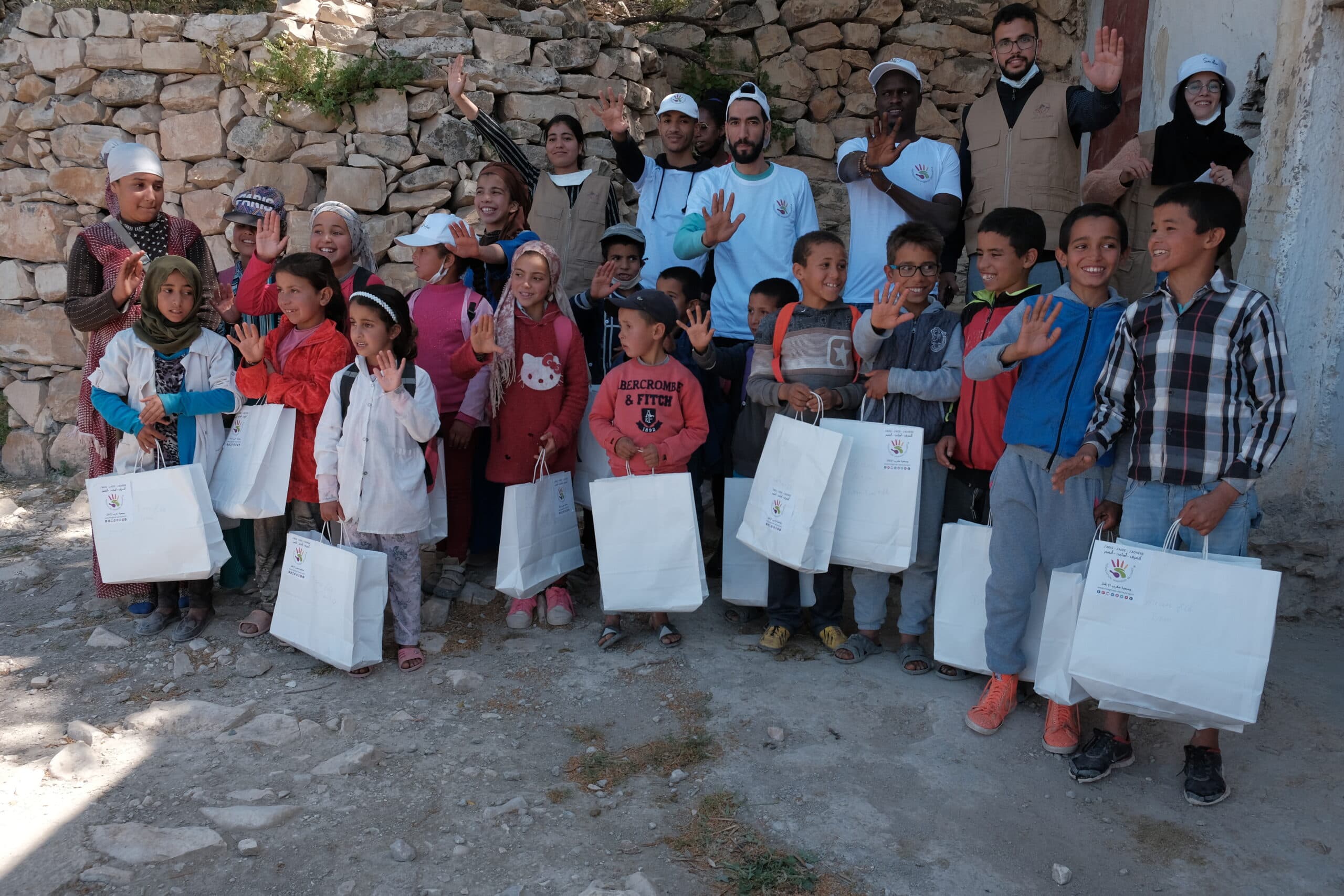
In the villages we support, access to water remains the leading cause of hardship, ahead of food and education. Families cannot stay without water. Migration to the outskirts of Casablanca and Marrakech adds to the urban hardship we also encounter during aid distributions.
Our Water for All programme works with local authorities to:
- Identify villages without a reliable water source, including those overlooked in official statistics
- Cofund boreholes and water collection systems with corporate donors
- Train residents in basic maintenance
Supporting the water programme
A business can sponsor an entire borehole, costing between MAD 80,000 and MAD 250,000 depending on depth and equipment. Payment goes directly to the technical provider. Partners receive a full report including the location, photos, measured flow rate and number of people served.