
Rebuilding Al Haouz: where do things stand two and a half years after the earthquake?
More than 54,000 homes rebuilt and MAD 7.2 billion allocated, yet some survivors still live in tents. A progress report from villages in the High Atlas.
On 8 September 2023, at 11:11 pm, an earthquake struck the High Atlas. It measured 7.2 on the Richter scale, with its epicentre at Ighil, 80 km from Marrakech. Nearly 3,000 people died, 5,674 were injured and hundreds of villages were devastated. Almost three years on, what does reconstruction look like on the ground?
What the official figures show
According to the latest update from the Interministerial Commission for Reconstruction, chaired by Head of Government Aziz Akhannouch:
- 54,425 homes have been rebuilt, with more than 3,000 still under construction
- MAD 7.2 billion in aid has been allocated
- 372 schools have been restored, with work under way on another 1,090 in the provinces of Al Haouz, Taroudant, Azilal, Chichaoua and Ouarzazate
On paper, the programme is moving forward. However, Transparency Maroc has published a more mixed assessment, highlighting payment delays and uneven follow-up between villages.
What we see on the ground
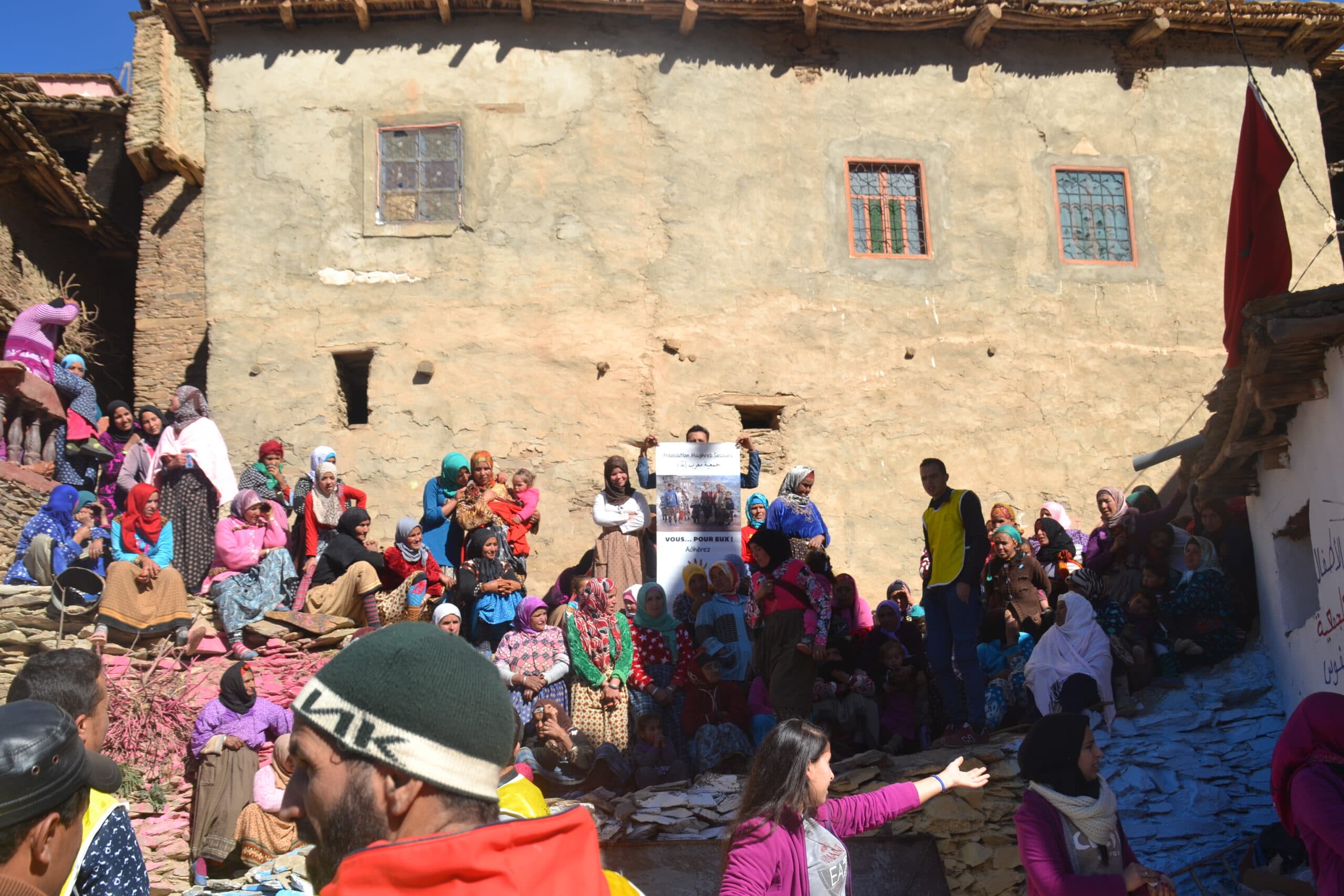
Our teams have supported several villages around Asni and Talat N'Yacoub. Rebuilt houses still stand alongside white Civil Protection tents. An AL24 News investigation reported that 90% of survivors still live in temporary accommodation in the most remote areas.
The obstacles are no longer financial, with aid released, but logistical:
- Difficult access roads, especially in winter
- A shortage of skilled tradespeople in isolated villages
- Terrain that makes removing rubble and delivering materials challenging
“We received the first payments. But finding a team to rebuild at an altitude of 2,200 metres is still very difficult.” — A father in Tikht, whom our team met in April 2026.
What Maghreb Secours is doing
Our role is to address gaps in support alongside the state: families missed by needs assessments, urgent medical cases and access to water in villages where springs have dried up or returned, as discussed in our article on that phenomenon.
Since the earthquake, our work has included:
- Regular food distributions in 14 villages
- Medical follow-up for children and older people through our partner clinics in Casablanca
- Targeted rebuilding of primary schools with local tradespeople
How to help
If your business would like to fund a specific part of reconstruction, such as a school, access to water or a child's medical care, we can arrange an operational partnership with direct payment to the provider: a clinic, school or local NGO. 100% of your contribution goes to work on the ground.